
Pothos Care Guide
Epipremnum aureum
Also called Devil's ivy, Golden pothos, Money plant
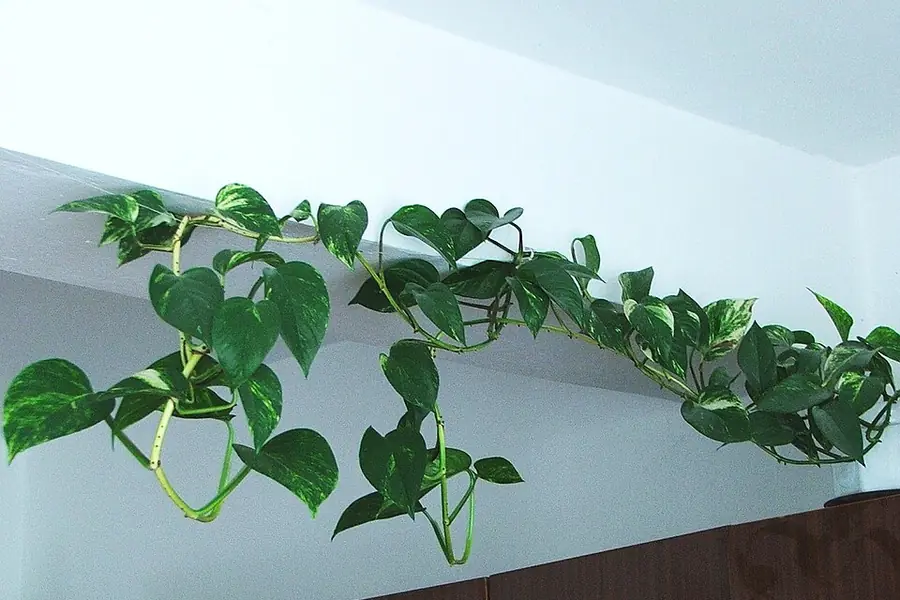
Photo Jerzy Opioła · CC BY-SA 4.0 via Wikimedia Commons
- Family
- Araceae
- Native to
- French Polynesia; naturalised across tropical Asia and Australasia
- Mature size
- Vines 6-10 ft indoors, trimmed to any length
- Toxicity
- Insoluble calcium oxalates cause mouth irritation, drooling and vomiting in cats and dogs. Hang it or keep it on a high shelf.
Pothos care at a glance
Light
Low to bright indirect
Tolerates low light, but variegated types generally keep their cream and gold markings better in bright indirect light. Growth and variegation may decline in dim positions.
How to measure light at homeWater
When the soil has partly dried
Check the potting mix before watering, then soak it thoroughly and let excess water drain. Persistently wet soil can lead to root rot.
How to water houseplants properlyHumidity
Average household humidity
Pothos adapts to typical indoor humidity. Keep it away from drying heat vents and watch new growth for stress.
Temperature
60-80°F (16-27°C)
Average room temperatures suit pothos. Avoid cold drafts and leaves touching very cold windows.
Soil
Standard potting mix with perlite
Ordinary indoor mix with a couple of handfuls of perlite stirred in. Pothos is not fussy as long as the pot drains.
Fertiliser
Occasionally during active growth
Use a balanced houseplant fertilizer according to its label, reducing or pausing it when the plant is not actively growing.
Repotting
When roots fill the pot
Move up one container size when roots circle the pot or grow through the drainage holes. Use fresh, well-drained potting mix.
How to repot a houseplantPropagation
Stem cuttings in water or mix
Cut below a node, remove the lowest leaf, and place the node in water or a moist rooting mix. Rooting time varies with light and temperature.
Pothos is widely grown as a forgiving houseplant because it tolerates a range of indoor conditions. Drooping can accompany dry soil, but it can also signal root trouble, so check the potting mix before reaching for the watering can.
Watering without a schedule
The practical rule for pothos is to let the potting mix partly dry, then water thoroughly until excess water runs from the drainage holes.
Slightly soft or drooping leaves can indicate thirst, but the same symptom can appear when damaged roots cannot take up water. Feel the potting mix before responding: water if it is dry, and investigate drainage and roots if it is still wet.
Check more often in warm, bright conditions and less often when growth slows. The interval will vary with the pot, room and season.
Light and variegation
Pothos is famous for tolerating low light, and that is true, but with a catch. Variegation is light-dependent. The cream, gold and white markings on Marble Queen, Golden and Snow Queen pothos are areas with less chlorophyll. In dim conditions the plant compensates by producing greener leaves that photosynthesise more efficiently.
- Plain green types (Jade, Neon): retain their color in lower light, though growth may slow
- Variegated types (Golden, Marble Queen, Manjula): need bright indirect light to hold their pattern
- Highly variegated types (Snow Queen): need the brightest indirect light you have
If your Marble Queen is coming in solid green, move it brighter and cut the reverted vine back to the last well-marked leaf.
Making a pothos look full
A pothos can develop long, sparsely leafed vines. Pruning and adding rooted cuttings can help create a fuller-looking pot.
- In spring, cut every long vine back by about a third, always just above a node.
- New growth may develop from nodes below the cuts.
- Root healthy cuttings in water or moist rooting mix, then plant established cuttings back into gaps in the same pot.
Results and timing depend on light, temperature, plant health and the number of cuttings used.
Propagation
Pothos stem cuttings root readily when they include a healthy node.
- Cut a section of vine with at least one node and 2-4 leaves.
- Strip the leaf closest to the cut so the node sits bare.
- Stand it in a glass of water with the node submerged.
- Refresh the water regularly and wait for healthy roots before potting into a well-drained mix.
For a node diagram, a comparison of water and rooting mix, and help with stalled cuttings, follow how to propagate pothos.
Common problems
Yellow leaves. Check the soil and drainage first, then compare the pattern with the yellow-leaves guide. A single older leaf can yellow naturally, while several leaves plus persistently wet mix point toward root stress.
Black stem bases and a sour smell. Root rot. Unpot, cut away every mushy brown root, and repot into fresh dry mix in a smaller pot. Take healthy cuttings as insurance.
Fine webbing under leaves. This can indicate spider mites. Isolate the plant and use the spider-mite guide to confirm the signs before treating it.
Sticky residue on leaves or the shelf below. Inspect closely for scale insects or mealybugs, isolate the plant if pests are present, and use a treatment labelled for the pest and plant.
Pothos and pets
Pothos contains insoluble calcium oxalate crystals and is not pet-safe. Chewing it can cause oral irritation, drooling and vomiting. Keep the whole trailing plant out of reach and contact a veterinarian or animal poison service if a pet has chewed it and develops symptoms.
If you have a determined chewer, choose a spider plant instead. It is non-toxic and grows in similar conditions.
Sources and further reading
- Pothos as a Houseplant — Penn State Extension
- Epipremnum aureum — NC State Extension
Pothos problems and fixes
| Symptom | Likely cause | What to do |
|---|---|---|
| Yellow leaves scattered through the plant, soil stays wet | Overwatering | Let the potting mix partly dry before watering again and confirm that excess water can leave the pot. Check other causes if the soil is not staying wet. Full guide → |
| Variegated leaves coming in solid green | Not enough light | Move to a brighter spot. Cut back the reverted section to the last well-variegated leaf to push new growth from there. |
| Long bare vines with leaves only at the tips | Low light plus no pruning | Move to brighter indirect light and cut vines back above a node. Pruning can encourage growth from other nodes; rooted cuttings can also be returned to the pot. Full guide → |
| Brown crispy patches in the middle of leaves | Direct sun scorch | Move out of direct afternoon sun or filter it with a sheer curtain. Damaged tissue will not recover, so trim badly affected leaves. |
Pothos FAQs
How often should I water a pothos?
Water after the potting mix has partly dried, then soak it thoroughly and let it drain. How quickly that happens depends on light, temperature, pot size and season, so use the soil rather than a fixed calendar.
Can pothos grow in low light?
Pothos tolerates lower light, but growth may slow and variegated varieties can lose some of their markings. Moderate to bright indirect light generally produces stronger growth and clearer variegation; avoid a sudden move into harsh direct sun.
Why is my pothos turning yellow?
Persistently wet soil is one common cause, but yellow leaves can also follow drought, low light, pests, root stress or normal ageing. Check the soil and drainage first, then look at which leaves are affected and whether the plant has other symptoms before deciding on a fix.
How do I make my pothos fuller instead of stringy?
Prune long vines just above a node to encourage new growth, and provide suitable indirect light. You can also root healthy cuttings and return them to the same pot to fill gaps; branching and rooting time vary with conditions.
Is pothos safe for cats and dogs?
No. Pothos contains insoluble calcium oxalate crystals that cause oral burning, drooling and vomiting if chewed. It is one of the most commonly reported houseplant exposures in pets. Hang it or place it well out of reach.
Related care guides
Published by Plantive · Published June 6, 2026 · Updated October 4, 2026