
Monstera Deliciosa Care Guide
Monstera deliciosa
Also called Swiss cheese plant, Split-leaf philodendron, Ceriman
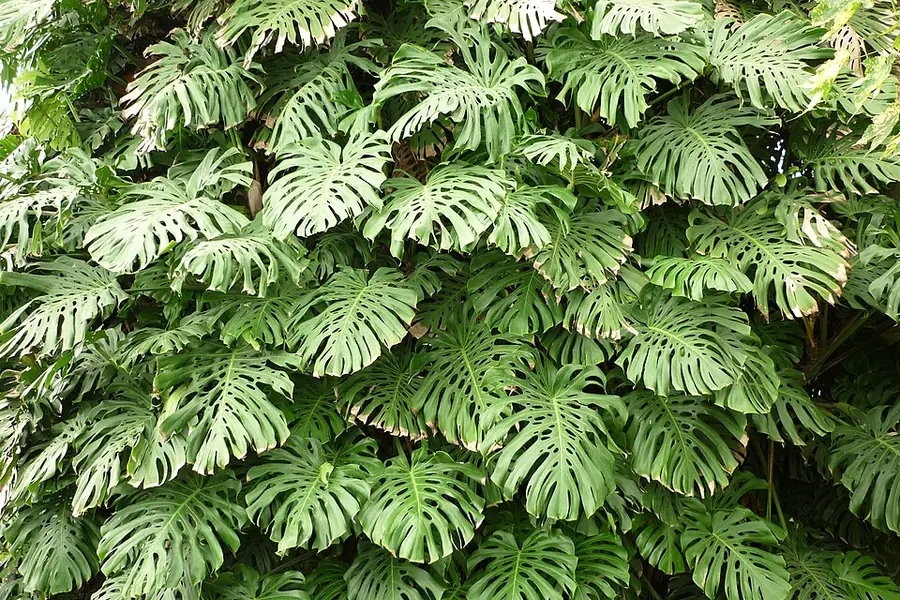
Photo Jungle Rebel from Brussels, Belgium · CC BY 2.0 via Wikimedia Commons
- Family
- Araceae
- Native to
- Tropical rainforests of southern Mexico and Central America
- Mature size
- 6-8 ft tall indoors, 3 ft wide; leaves up to 2 ft across
- Toxicity
- Contains insoluble calcium oxalate crystals. Chewing leaves causes intense mouth burning, drooling and swallowing difficulty in cats, dogs and children. Keep out of reach.
Monstera Deliciosa care at a glance
Light
Medium to bright indirect
Choose a bright indoor position without abrupt exposure to harsh direct sun. Young plants naturally have fewer holes and splits than mature climbing plants.
How to measure light at homeWater
When the top 1-2 inches are dry
Water thoroughly when the upper potting mix is dry, then let excess water drain. Check the soil rather than following a fixed calendar.
How to water houseplants properlyHumidity
Average to humid
Monsteras adapt to average indoor humidity. Keep them away from drying heat vents and watch new growth for stress.
Temperature
65-85°F (18-29°C)
Keep above 55°F (13°C). Cold drafts from doors and single-glazed windows cause sudden leaf drop and black patches.
Soil
Chunky, fast-draining aroid mix
Use a well-drained potting mix with coarse material such as bark or perlite, in a container with a drainage hole.
Fertiliser
During active growth
Use a balanced houseplant fertilizer according to its label while the plant is producing new growth, and reduce feeding when growth slows.
Repotting
When root-bound
Move to a slightly larger container when roots circle the pot, emerge from drainage holes or the mix dries unusually quickly.
How to repot a houseplantPropagation
Stem cuttings with a node
Take a cutting that includes a node and axillary bud. Root it in water or a well-drained rooting medium; a leaf without a node will not make a new plant.
The Monstera deliciosa is popular for good reason: it is adaptable indoors, grows visibly in suitable conditions, and its mature split leaves are distinctive. Watering, light, maturity and climbing support all affect how it grows.
How to water a Monstera deliciosa
Push a finger two inches into the soil. If it comes out dry, water. If there is any dampness, wait.
When you do water, water thoroughly. Take the plant to a sink and pour until water runs freely from the drainage holes, then let it drain completely before returning it to its cover pot. Repeated shallow sips can wet only the upper layer while leaving much of the root ball dry.
A plant in a porous pot in a warm, bright room may dry much faster than one in a plastic pot in a cool room. Check the upper one to two inches regularly and treat any interval as a reminder to inspect the soil, not as an instruction to water.
Avoid watering again while the root zone is still wet. Persistently wet, poorly drained mix can damage roots and produce the same drooping that people often mistake for thirst.
Light: the fenestration question
Fenestration means the holes and splits in mature leaves. Light matters, but so do the plant’s age and climbing habit.
A Monstera generally produces stronger mature growth in bright, indirect light, but the useful distance from a window depends on its direction, glass, season and outdoor obstructions. As a starting point:
- Brighter: near an east-facing window or set back from a strong south- or west-facing window
- Moderate: an unobstructed north-facing window or a brighter position farther into the room
- Possibly too dim: a position where new growth becomes smaller, paler or more widely spaced
Direct midday sun through glass will scorch the leaves with bleached tan patches, so filter harsh southern exposure with a sheer curtain.
The second factor is maturity. Juvenile Monsteras naturally produce solid, heart-shaped leaves. A stable pole or plank supports the plant’s climbing habit, but no care change can guarantee that the next leaf will have a particular number of splits.
Soil and potting
Monsteras are climbing vines with aerial roots. Indoors, use a mix that balances moisture with air around the roots:
| Component | Purpose |
|---|---|
| Indoor potting mix | Holds moisture and nutrients |
| Orchid bark | Adds coarse structure and air spaces |
| Perlite or pumice | Improves drainage and aeration |
| Coco coir, when needed | Adds some moisture retention |
Choose a mix that drains freely without drying immediately. If lower leaves keep yellowing, inspect soil moisture, roots, light and normal leaf age before blaming the mix alone.
Always use a pot with drainage holes. Decorative cachepots are fine as long as the plant sits inside a nursery pot you can lift out to drain.
Feeding
Use a balanced houseplant fertilizer according to its label while the plant is actively growing. Reduce or pause feeding when growth slows, and flush the potting mix if fertilizer salts form a crust on the surface.
Training and pruning
Left unsupported, a Monstera can sprawl sideways. A moss pole, coir pole or wooden plank gives the main stem something stable to climb. Attach the stem loosely with soft plant ties without forcing aerial roots into a particular position.
Prune in spring:
- Remove any yellow or damaged leaves at the base of their stem.
- Cut back leggy stems just above a node to encourage branching.
- Save the cuttings, since anything with a node and an aerial root will root in water.
Propagating a Monstera
Stem cuttings can produce a new plant when they include a node and axillary bud.
- Find a node, the small brown bump on the stem where a leaf and aerial root emerge.
- Cut about half an inch below the node with clean shears. Your cutting needs the node; a leaf alone will never root.
- Put it in a jar of water with the node submerged and the leaf out.
- Change the water weekly. Roots appear in 2-4 weeks.
- Pot into a well-drained mix once several healthy roots have formed and the cutting is growing.
Keep the rooting medium evenly moist rather than saturated while the cutting establishes, then begin letting the upper layer dry between waterings.
Pests to watch for
Check the undersides of leaves regularly for:
- Spider mites: fine webbing where the leaf meets the stem, stippled yellow speckling. Thrive in dry air.
- Thrips: silvery scarring and black specks; new growth comes in distorted.
- Mealybugs: white cottony clumps in leaf axils. See how to get rid of mealybugs.
Wipe the leaves with a damp cloth when they become dusty. This also gives you a chance to notice pests before they spread.
Sources and further reading
- Monstera deliciosa — University of Minnesota Extension
Monstera Deliciosa problems and fixes
| Symptom | Likely cause | What to do |
|---|---|---|
| New leaves come in solid, with no holes or splits | Not enough light, or the plant is still juvenile | Move gradually to brighter indirect light and give the stem stable support. Keep in mind that juvenile plants naturally produce solid leaves. Full guide → |
| Lower leaves turning yellow, soil stays damp | Overwatering and compacted soil | Let the top 2 inches dry fully before the next water and repot into a chunky aroid mix with more bark and perlite. Full guide → |
| Crispy brown edges on otherwise green leaves | Low humidity or salt build-up from tap water and fertiliser | Check for dry air, inconsistent watering and fertilizer-salt buildup. Keep conditions steady and flush the potting mix with plain water if salts have accumulated. Full guide → |
| Long bare stems with widely spaced small leaves | Light too dim; the plant is stretching toward the window | Move it closer to the light and give it a moss pole to climb, because climbing monsteras produce larger, more fenestrated leaves. Full guide → |
Monstera Deliciosa FAQs
How often should I water a Monstera deliciosa?
Water when the top 1-2 inches of potting mix feel dry, then soak the mix and let excess water drain. The interval changes with light, temperature, pot size and season, so check the soil rather than watering by calendar.
Why are my Monstera leaves not splitting?
Immaturity, limited light and a lack of climbing support can all contribute. Young Monsteras naturally produce solid leaves. Give the plant brighter indirect light gradually, support the main stem, and judge changes by new leaves rather than expecting existing leaves to split.
Are Monstera deliciosa toxic to cats and dogs?
Yes. All parts contain insoluble calcium oxalate crystals that cause intense oral pain, drooling and difficulty swallowing if chewed. It is rarely fatal but is genuinely painful, so keep the plant out of reach of pets and children and call your vet if ingestion occurs.
Should I cut the aerial roots off my Monstera?
No, leave them. Aerial roots anchor the plant to its support and absorb moisture, and removing them stresses the plant. Either tuck them into a moss pole, direct them back into the pot, or simply let them hang.
How do I make my Monstera grow bigger leaves?
Give it something to climb. In the wild Monsteras are hemiepiphytes that grow larger leaves the higher they climb. A moss pole or wooden plank, combined with bright indirect light and monthly feeding through the growing season, produces noticeably bigger and more fenestrated foliage.
Related care guides
Published by Plantive · Published June 4, 2026 · Updated September 20, 2026