
Peace Lily Care Guide
Spathiphyllum wallisii
Also called Spathiphyllum, White sails plant, Closet plant
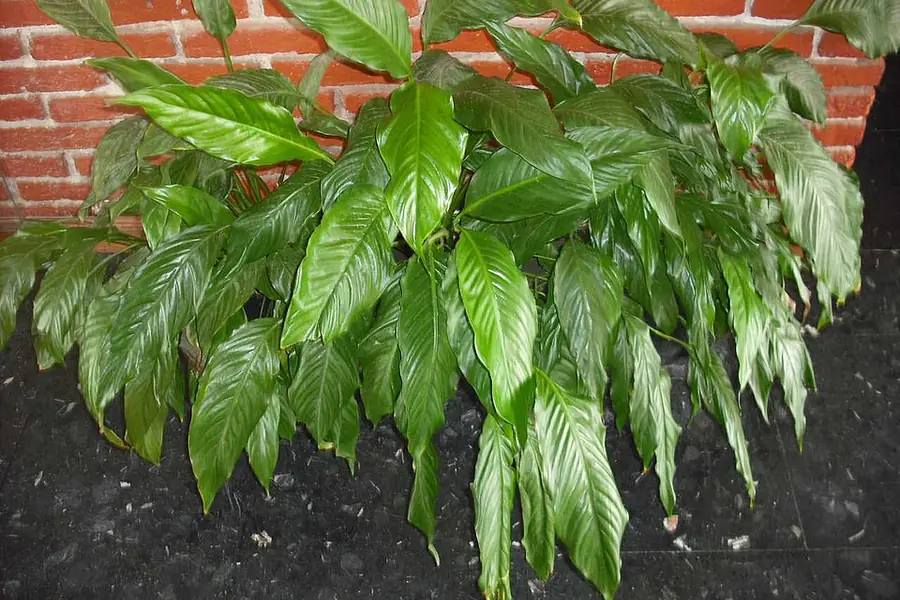
Photo Rosina Peixoto · CC BY-SA 3.0 via Wikimedia Commons
- Family
- Araceae
- Native to
- Tropical rainforest floor of Central and South America
- Mature size
- 1-3 ft tall and wide, depending on cultivar
- Toxicity
- Calcium oxalate crystals cause burning of the mouth and throat, drooling and vomiting in cats and dogs. Not a true lily, so not kidney-toxic to cats, but still unpleasant.
Peace Lily care at a glance
Light
Medium indirect
A rainforest floor plant. Bright indirect light produces the most flowers; medium light keeps it healthy. Direct sun burns the leaves quickly.
How to measure light at homeWater
Every 5-10 days
Keep lightly moist but never soggy. The peace lily droops dramatically when thirsty and recovers within hours, which is a useful if dramatic signal.
How to water houseplants properlyHumidity
50%+
Prefers humid air. Brown leaf tips in winter are usually a humidity problem, not a watering one.
Temperature
65-80°F (18-27°C)
Keep above 55°F (13°C) and away from cold drafts, which cause blackened leaf margins.
Soil
Rich, moisture-retentive mix
Standard peat-based potting mix with some perlite. Unlike most aroids, the peace lily likes a mix that holds moisture.
Fertiliser
Every 6 weeks in spring and summer
A balanced feed at quarter to half strength. Over-feeding is a common cause of brown tips on this plant.
Repotting
Every 1-2 years
Peace lilies grow quickly and become root-bound. Repot in spring, or divide the clump into two plants.
How to repot a houseplantPropagation
Division only
Separate the crown into clumps, each with roots and several leaves, when repotting. Cuttings do not work.
The peace lily is the most communicative houseplant there is. It wilts theatrically when thirsty, stands back up within hours of a drink, and flowers indoors more readily than almost anything else. That feedback loop makes it genuinely easy to learn on, as long as you understand what it is actually telling you.
The drooping signal
A wilting peace lily looks like a disaster and usually is not. When the soil dries, the leaves lose turgor and the whole plant collapses. Water it thoroughly and it stands back up within two to four hours.
Before you water, feel the soil. This is the critical step:
- Soil dry, plant drooping → thirst. Water thoroughly.
- Soil wet, plant drooping → root rot. Watering again makes it worse.
The second case is the one that catches people out. A rotting root system cannot take up water, so the plant wilts exactly as if it were dry. If the soil is damp and the plant is limp, unpot it and check the roots. Healthy ones are firm and white; rotted ones are brown, soft and smell sour.
One caution: while a peace lily recovers from wilting, doing it repeatedly damages the fine root hairs and causes the leaf edges to brown permanently. Use the droop as a backstop, not as your watering schedule.
Watering properly
Peace lilies like their soil lightly and evenly moist, making it one of the few common houseplants that does not want to dry out between waterings.
Check every few days by pushing a finger an inch into the soil. If it feels barely damp, water. Pour slowly until water runs from the drainage holes, then empty the saucer completely.
Water quality matters more here than for most plants. Peace lilies are sensitive to fluoride and chlorine, which accumulate at the leaf tips and burn them brown. Filtered water, rainwater, or tap water left in an open jug overnight all work.
Getting it to flower
Those white “flowers” are technically spathes, modified leaves wrapping a spadix of tiny true flowers. To get them:
- Light is the main lever. Bright indirect light produces blooms; dim light produces leaves only. An east-facing window a few feet back is ideal.
- Feed during the growing season. A balanced fertiliser at quarter to half strength every six weeks from spring through summer.
- Be patient after dividing. A freshly split plant spends its first year rebuilding roots.
- Do not repot too often. A slightly snug pot encourages flowering.
Blooms last several weeks, fade from white to green, and eventually brown. Cut the whole stalk right at the base once it fades.
Humidity and brown tips
Brown, crispy tips are the peace lily’s most common cosmetic complaint. In order of likelihood:
- Dry air, especially in winter with heating on. Aim for 50% humidity; a humidifier or a tray of pebbles and water near the plant helps. Misting does very little.
- Tap water chemicals. Switch to filtered or stood water.
- Over-fertilising. Reduce to quarter strength and flush the pot with plain water twice a year to leach out salts.
You can trim brown tips with clean scissors, cutting at an angle to follow the leaf’s natural shape. It will not spread, but the trimmed edge will not regrow green either.
Dividing
Peace lilies grow as clumping crowns and are easy to split. In spring, tip the plant out and look for natural divisions, meaning groups of leaves with their own roots. Pull or cut them apart, making sure each division has a healthy root mass and at least three or four leaves, and pot each into fresh moisture-retentive mix.
Keep divisions slightly more humid and out of direct light for their first few weeks while they establish.
Peace Lily problems and fixes
| Symptom | Likely cause | What to do |
|---|---|---|
| Whole plant collapsing dramatically | Underwatering, usually | Water thoroughly; it should stand back up within 2-4 hours. If it stays limp with wet soil, suspect root rot instead. Full guide → |
| Brown, crispy leaf tips | Low humidity, fluoride and chlorine in tap water, or over-fertilising | Use filtered or left-out water, raise humidity above 50%, and feed at quarter strength. Flush the soil twice a year. Full guide → |
| No flowers for a year or more | Light too dim, or the plant is too young | Move to bright indirect light and feed through spring and summer. Peace lilies need decent light to bloom, and young divisions take a year to mature. |
| Green flowers instead of white | Too much light, or the bloom is simply ageing | Blooms naturally fade from white to green as they age, so cut the stalk at the base. If new blooms open green, reduce light slightly. |
| Yellow leaves throughout | Overwatering, or normal ageing of the oldest leaves | Check the soil is not staying wet. Cut old yellow leaves at the base; a few per year is normal. Full guide → |
Peace Lily FAQs
Why is my peace lily drooping?
Almost always thirst. Peace lilies wilt dramatically when the soil dries out and recover fully within a few hours of watering. Feel the soil first, though. If it is wet and the plant is still limp, the problem is root rot rather than drought, and the treatment is the opposite.
How often should I water a peace lily?
Roughly every 5-10 days, keeping the soil lightly moist but never waterlogged. This is one of the few houseplants that prefers not to dry out completely. Many people simply wait for the first hint of drooping and water then, which works well as long as you do not let it wilt severely and repeatedly.
Why is my peace lily not flowering?
Usually not enough light. Peace lilies survive in dim rooms but only bloom reliably in bright indirect light. Feeding through spring and summer helps, and a plant that has just been divided typically needs a full year to build up enough energy to flower again.
Are peace lilies toxic to cats?
Yes, but not in the way true lilies are. Peace lilies contain calcium oxalate crystals that cause painful mouth and throat irritation, drooling and vomiting. Unlike Lilium and Hemerocallis species, they do not cause the acute kidney failure that makes true lilies lethal to cats. It is still a vet call if your cat chews one.
Why do peace lily leaves get brown tips?
Three usual suspects: dry air, chemicals in tap water, and over-fertilising. Raise humidity above 50%, switch to filtered water or leave tap water out overnight, and feed at quarter strength no more than every six weeks. Flushing the pot with plain water twice a year clears accumulated salts.
Related care guides
Published by Plantive · Published June 18, 2026 · Updated August 14, 2026